Challenge
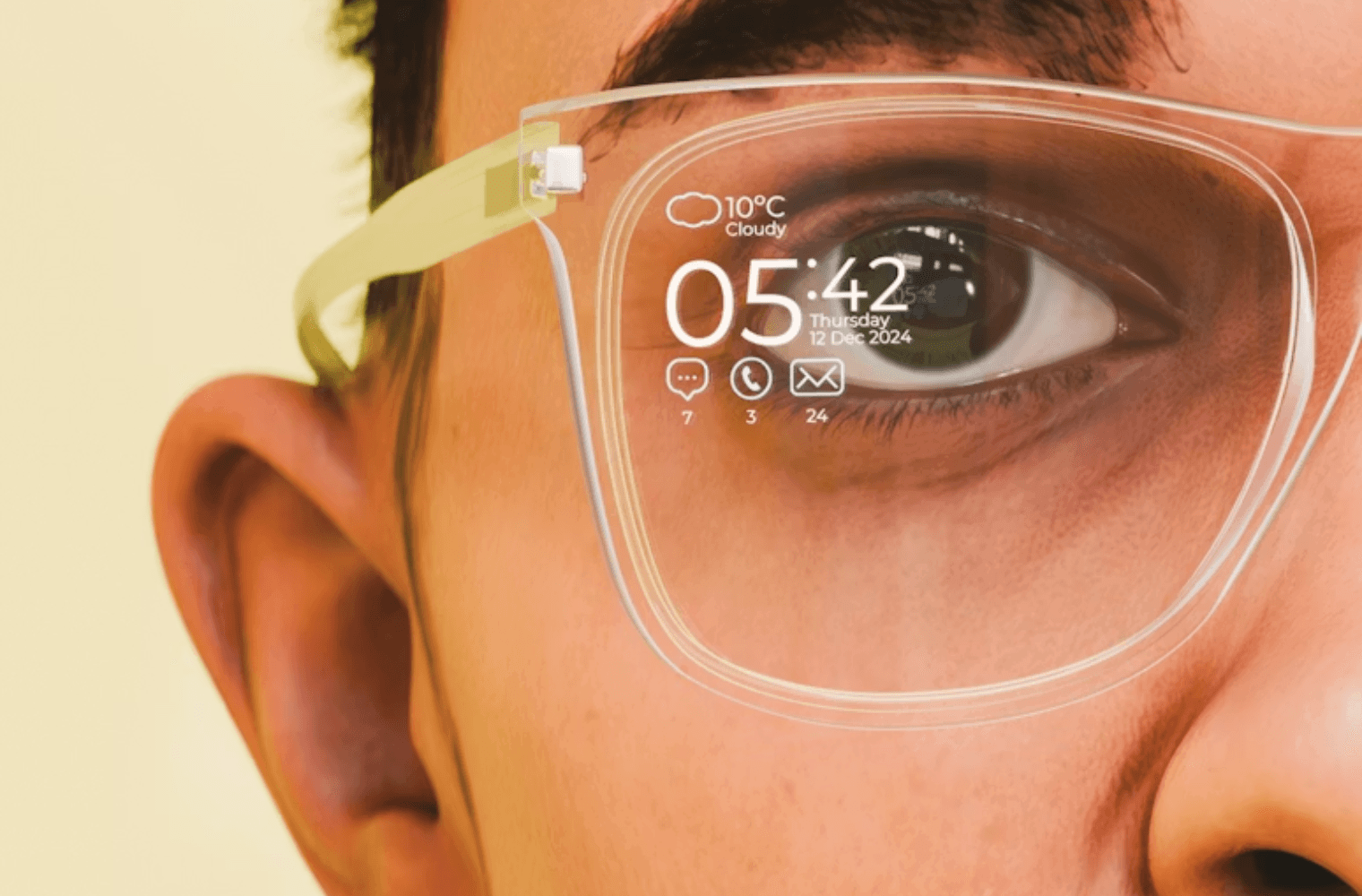
Imagine a world in which we no longer rely on power-hungry mobile phones and other screen devices to communicate and consume content day-to-day. Instead, we use AR glasses.
Augmented Reality (AR) is a technology that overlays digital content onto the real world in real-time. It enhances users’ perceptions and interactions with their environment by integrating virtual elements with physical surroundings.
While AR is expected to transform consumer electronics, healthcare, and industrial training, the light sources and hardware needed to optimise this technology are currently too bulky, unstable, and power-hungry for mass-market devices.
Opportunity
Thanks to its strong photonic chip R&D and manufacturing ecosystem, by engaging with AR device value chains, the Netherlands has a competitive advantage in the global AR market. And with sales projected to reach $88 million in 2026, the economic opportunity is significant as well.
Solution
Through our ecosystem, the aim of this mission is to develop scalable and stable photonic light sources for compact, high-performance AR glasses and related long-term applications, including the application of AR in automotive, medical, and industrial settings.
Augmented Reality has enormous potential, but today’s hardware still gets in the way. Photonic technologies offer a strong route to more compact, stable, and efficient optical engines. This solution focuses on making AR devices more wearable and scalable. It’s a key step toward real-world adoption.
Benefits
As photonic chips provide a highly compact and efficient optical engine, they enable AR smart glasses with a much smaller form factor and lower power consumption. This makes it possible to design lighter, more stable, and more wearable devices compared to current solutions. As a result, photonics supports the transition from experimental prototypes to scalable, consumer-ready AR products.